
Fractional Automation Manager for Marketing Teams
A fractional automation manager for small marketing teams turns scattered tools and workflows into an owned, documented operating system.

TL;DR
- Hire for ownership of the automation portfolio, not just production of isolated workflows.
- Expect a verified inventory, prioritized backlog, safety rules, documentation, and failure recovery.
- Start with one contained workflow that matters to the team and can be verified end to end.
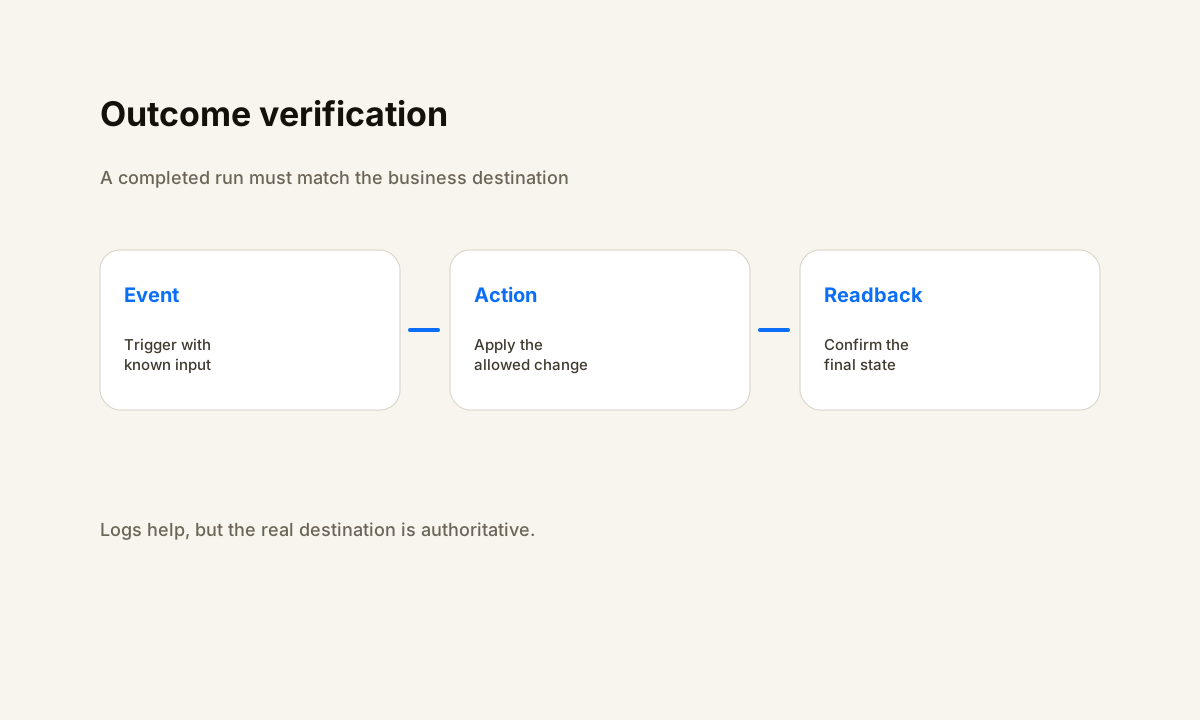
- Measure the real business state, not the number of automations built or tasks reported as successful.


What a Fractional Automation Manager Owns
A small marketing team can have capable people and still lack one owner for the systems between them. Leads enter through forms, ads, chat, referrals, and event lists. Campaign data moves between a CRM, email platform, spreadsheets, calendars, ad platforms, project tools, and reporting dashboards. Each tool may work on its own while the handoffs between them remain fragile.
A fractional automation manager owns that connected operating layer. The role should maintain the automation backlog, translate campaign needs into workflow requirements, decide what should and should not be automated, coordinate implementation, verify destination state, document the result, and watch failures after launch.
The manager does not need to perform every build personally, but someone must remain accountable for the whole system.
HubSpot's current workflow guide illustrates why this ownership matters. Its workflow capabilities can use record changes, integration events, formatting, property updates, webhooks, and other actions across several business functions. As capability expands, so does the need for consistent design, enrollment rules, evidence, and recovery. A tool administrator alone may not own those cross-system decisions.
When a Small Marketing Team Needs the Role
The strongest signal is not company size. It is the number of recurring handoffs that depend on several tools and people. If campaign launches require manual exports, lead routing changes by channel, dashboards disagree, automations fail without an owner, or the same workflow keeps being rebuilt, the team has an ownership gap.
The role is especially useful when marketers are spending planning time on connector maintenance, when the business relies on freelancers who each understand only one part of the stack, or when a founder must personally approve every small systems decision. A fractional structure can add ongoing ownership without creating a full internal operations department before the workload justifies it.
It may be premature when the team has only one simple workflow, no stable process to automate, or no one internally responsible for the marketing outcome. In that case, a contained implementation project may be enough. Review HWA's guide to hiring business process automation consultants for a broader view of external automation help.
What Should Be Included in the Scope
The scope should begin with inventory and decision rights. List the forms, CRM objects, campaign tools, connected accounts, data owners, customer-facing messages, reports, and manual workarounds that matter. For every critical workflow, identify the trigger, system of record, allowed actions, human approval points, failure signal, and proof of completion.
Then organize work into a visible backlog. Each item should state the operational problem, expected destination state, affected tools, owner, risk, and verification method. Building should not begin until the team can explain what a correct result looks like.
That rule prevents attractive automations that run successfully but create the wrong contact, assign the wrong owner, or trigger customer communication at the wrong time.
Governance is part of delivery, not an enterprise-only extra. Zapier's current enterprise material emphasizes control over apps and actions, delegated spaces, and visibility across workflows. Microsoft describes a Center of Excellence as an organizational capability that combines leadership, governance, enablement, standards, and processes.
A small team needs a lighter version of the same ideas: approved connections, clear permissions, one owner, useful logs, and a recovery path.
Fractional Manager, Freelancer, Agency, or Internal Hire
A freelancer is usually a fit for one defined workflow with clear requirements and a finish line. An implementation agency is useful when the team needs a larger project, several builders, or deep expertise in a specific platform. An internal hire makes sense when automation ownership is consistently full-time and must remain close to daily operations.
A fractional manager fits between those models. The business needs ongoing judgment and coordination, but not necessarily a full-time employee or a large project team. The manager can maintain priorities, direct specialists, protect standards, and keep improvements tied to marketing outcomes. The important distinction is accountability.
If the engagement ends when a workflow turns on, it is implementation. If it continues through measurement, documentation, failures, and the next priority, it is management.
Do not select the model from a title alone. Ask who owns the backlog, who approves risky actions, who verifies production state, who maintains documentation, and who responds when an integration breaks. If those answers point back to the founder or marketing lead, the ownership gap remains.
What the First Month Should Produce
The first month should create evidence, not a flood of disconnected builds. Start with a verified inventory and select one workflow that is valuable, bounded, reversible, and easy to observe. Map its current path, define the desired state, identify approvals, and record how success will be checked in the real destination system.
A useful first-month package includes the current-state map, prioritized backlog, connection and permission register, human-gate rules, one implemented improvement, test evidence, failure alerts, recovery notes, and a short operating guide for the team. Asana's workflow management guidance describes structured workflows with forms, rules, templates, task sequences, dashboards, and status updates.
Those concepts are useful because a marketing team needs both the automation and a visible way to manage the work around it.
For a contained first build, the team might repair a lead handoff, standardize campaign intake, reconcile source fields, automate a review queue, or create a verified reporting update. HWA's CRM workflow handoff checklist shows the level of state-by-state verification that a production workflow should receive.
Questions to Ask Before Hiring
Use questions that expose operating behavior rather than tool familiarity. A strong candidate should be able to explain how they discover the real workflow, reduce an ambiguous request, protect human-only actions, prevent duplicates, verify side effects, and recover from uncertain failures.
- How will you inventory our tools, connections, workflows, and owners?
- How do you decide which marketing process should be automated first?
- What actions remain behind human approval?
- How do you prevent a timeout or retry from creating duplicate work?
- What real destination state proves a workflow succeeded?
- How will the team see failures and know who owns recovery?
- What documentation remains if the engagement ends?
- How do you separate platform credentials and limit permissions?
- How often will the backlog and results be reviewed?
The answer should be a manageable operating rhythm, not a promise to automate everything. If the immediate need is a platform-specific build, compare the role with HWA's Zapier expert consultant guide and n8n automation consultant guide.
FAQ
What does a fractional automation manager do?
A fractional automation manager owns the automation backlog, maps workflows, prioritizes improvements, coordinates builds, verifies real outcomes, documents the system, and watches failures across the tools a team already uses.
How is a fractional automation manager different from a freelancer?
A freelancer is often hired to complete a defined build. A fractional manager is accountable for the ongoing portfolio of workflows, including priorities, standards, handoffs, documentation, measurement, and recovery after launch.
When should a marketing team hire fractional automation help?
Consider it when recurring campaign work crosses several tools, ownership is unclear, workflows fail silently, the team keeps rebuilding similar automations, or important improvements stay stuck because no one owns the whole system.
What should the first month include?
The first month should produce a verified tool and workflow inventory, a prioritized backlog, clear ownership and safety rules, one contained improvement, failure monitoring, and documentation that the marketing team can actually use.
How should automation work be measured?
Measure the operational state the workflow is meant to change, such as handoff completion, data accuracy, response delay, manual review volume, campaign readiness, or recovery time. A successful run log alone is not proof of a successful business outcome.
Sources
Help With Automation
Give your automation backlog a real owner.
HWA can map your marketing systems, prioritize the highest-value workflow, implement a contained first improvement, and leave the evidence and operating rules your team needs.
Talk through the workflow