
Service Business Phone Comparison
AI Phone Answering vs Human Receptionist
AI phone answering and human receptionists solve different front-desk problems. Compare cost, coverage, call capacity, and handoff quality before you choose.
TL;DR
- AI phone answering costs a fraction of a human receptionist and covers nights, weekends, and simultaneous calls without extra staffing.
- A human receptionist wins on empathy, complex problem-solving, and calls where judgment matters more than speed.
- The best setup for most service businesses is AI handling routine calls with a clean handoff to a person for exceptions.
- Decide on call volume, coverage hours, call complexity, and integration needs before comparing prices.
What AI phone answering actually does
An AI phone answering service is an automated voice system that picks up business calls, holds a natural conversation, and completes routine tasks without a human operator.
The caller speaks normally, the system converts speech to text, a language model determines the intent and response, and the answer is spoken back in a natural voice. This happens fast enough that the conversation feels normal.
Current services handle appointment booking, frequently asked questions, lead qualification, message taking, and call routing. When a call needs a person, the system performs a warm transfer with the caller intent and captured details already passed along, or it records a transcript and summary for callback. Providers like Quo and Zoom document these capabilities in their current product descriptions.
If you are setting up AI call handling from scratch, read the AI voice receptionist setup guide for local businesses. The configuration choices there determine whether callers get answers or get frustrated.

What a human receptionist actually does
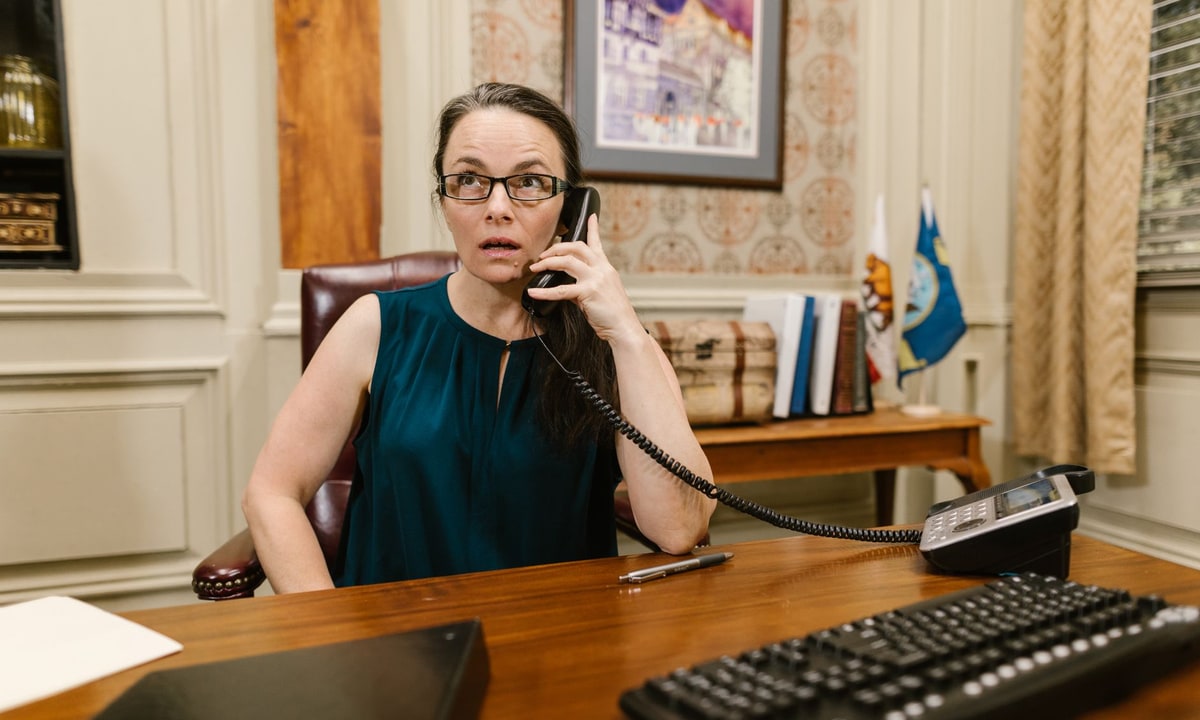
A human receptionist answers calls, greets visitors, schedules appointments, takes messages, routes inquiries, and handles the small judgment calls that come with front-desk work. A good receptionist reads tone, de-escalates frustration, recognizes repeat callers, and knows when a situation needs a manager rather than a script.
The constraint is capacity. One person handles one conversation at a time, works one shift, and needs breaks, sick days, and vacation. During a busy period with three simultaneous calls, two callers wait or hang up. After-hours coverage requires a second shift, an answering service, or voicemail.
Missed calls have a direct cost. HWA's missed call automation guide for local businesses covers how unanswered calls turn into lost jobs and what a callback workflow should capture.
AI phone answering vs human receptionist: cost comparison
Cost is where the gap is widest, but the salary figure alone misleads. According to 2025 Bureau of Labor Statistics employer compensation data cited in current industry analyses, the median annual salary for a full-time US receptionist is $36,920.
The fully loaded cost with payroll taxes, benefits, paid time off, training, and turnover lands between $50,000 and $65,000 per year. That covers one person, one shift, one conversation at a time.
AI phone answering services are priced per month based on minutes or call volume. Entry options start around $49 per month for a few hundred minutes, while fuller-featured services run $199 to $300 per month.
The price covers 24/7 operation, simultaneous calls, transcripts, and CRM integration. There is no recruiting cost, no training period, and no coverage gap when someone calls in sick.
A middle option exists: live virtual receptionist services with human agents, typically $300 to $800 per month for 30 to 100 calls. These give you human judgment without a full-time hire, but they still work limited hours and handle one call per agent at a time.
Do not compare sticker prices alone. Compare cost per covered hour and cost per handled call at your actual volume. A business receiving 20 calls per week during business hours has a different answer than one receiving 80 calls per week with half arriving after 6 PM.

The HWA front-desk decision framework
Help With Automation uses this framework to recommend a front-desk setup. It is an HWA evaluation method, not an industry standard. Score each factor for your business before choosing.
- Call volume and simultaneity. Count calls per week and note how often two or more arrive at once. Frequent simultaneous calls favor AI or a service with unlimited concurrency.
- Coverage hours. List every hour a caller might reach you, including evenings and weekends. Each uncovered hour is a missed-call window.
- Call complexity. Separate routine calls (booking, hours, pricing FAQs, intake) from complex ones (complaints, disputes, custom quotes). Routine-heavy call mixes favor AI.
- Handoff quality. Define what the next step needs: a booked appointment, a qualified lead in the CRM, or a detailed message. The system must produce that output reliably.
- Integration needs. Name the calendar, CRM, and messaging tools the front desk must update. AI services integrate directly; a human needs the same tools plus training.
- Brand risk tolerance. Decide which calls must never be handled by software. High-emotion or high-value conversations may justify a human even when AI is cheaper.
Most service businesses land on a hybrid: AI answering routine calls around the clock, with defined transfer rules sending complex calls to a person. The framework makes that decision explicit instead of accidental.
Coverage and capacity: where AI wins clearly
AI answering operates 24 hours a day, 7 days a week, with no shift changes. It answers the third simultaneous call as readily as the first. For service businesses where emergency or after-hours calls turn into booked jobs, this coverage has direct revenue value.
A human receptionist covers about 2,080 hours per year on a full-time schedule. Evenings, weekends, lunch breaks, sick days, and vacation create gaps. Filling those gaps means overtime, a second hire, or an answering service, each adding cost.
Speed matters too. HWA's guide to reducing lead response delays shows how response time affects whether a lead becomes a customer. An AI system that answers on the first ring and books directly into the calendar removes the delay entirely for routine calls.

Judgment and empathy: where a human wins clearly
AI answering follows its training and transfer rules. It does not read between the lines, sense when a caller is about to cancel, or negotiate a sensitive situation. When a caller is angry about a missed appointment or disputing a charge, a human de-escalates in ways software cannot.
Humans also handle ambiguity better. A caller who describes a problem in vague terms, changes topics mid-call, or needs advice rather than a transaction will get further with a person. AI systems have improved at handling interruptions and topic changes, but they still work best when the call has a defined purpose.
The practical answer is routing, not replacement. Define which call types transfer immediately: complaints, cancellations with emotion, complex quotes, and anything involving significant money or legal risk. Let AI handle the rest and give the human team clean context on every transfer.
How an AI answering workflow actually runs
For implementation-led readers, here is the workflow from trigger to measurement that HWA recommends for AI call handling. This is a reference pattern, not a measured HWA client outcome.
Trigger: incoming call to the business number during defined hours, including after-hours overflow.
Steps: AI greets the caller with a business-specific greeting, identifies intent (booking, question, complaint, vendor), answers from the knowledge base or books into the calendar, captures name, phone, and reason, then either completes the task or warm-transfers with context.
Data: every call produces a transcript, summary, intent tag, and outcome logged to the CRM. Missed-call rules trigger an immediate SMS follow-up so no caller waits for a callback.
Measurement: track answer rate, booking conversion, transfer rate, and callback time weekly. A rising transfer rate means the knowledge base or routing rules need work, not that the concept failed.
Pair this with HWA's automated lead follow-up diagnostic when calls are answered but leads still go cold. The phone is only the first step.
Frequently asked questions
Can AI phone answering replace a human receptionist?
AI phone answering can replace a human receptionist for routine calls such as appointment booking, FAQs, message taking, and lead qualification. It does not replace a human for complex complaints, negotiations, or situations that need empathy and judgment.
How much does AI phone answering cost compared to a receptionist?
AI phone answering services typically cost from around $49 to a few hundred dollars per month depending on call volume. A full-time human receptionist costs $50,000 to $65,000 per year fully loaded, according to 2025 BLS compensation data cited in industry analyses.
Does AI phone answering work after hours?
Yes. AI phone answering works 24/7 without extra staffing cost. A human receptionist covers one shift, so after-hours calls go to voicemail or an answering service unless you pay for additional coverage.
What happens when AI phone answering cannot handle a call?
A well-configured AI answering service transfers the call to a person with the caller context already captured, or takes a detailed message with a transcript and summary so the team can follow up with full context.
Sources
About the author
Dustin De Jager is the founder of Help With Automation. HWA maps, builds, tests, and documents business workflows across CRM, communications, intake, scheduling, and operations systems.
Editorial note: This article was drafted with AI assistance and reviewed against HWA's research and quality standards. Statistics and product claims are sourced as cited; frameworks and recommendations reflect HWA's operational approach.